Published Android app
LODORi
A meditation app that writes and voices a personalised session in about 25 seconds. React Native, FastAPI, subscriptions, ads, safety checks, and a public release on Google Play.
 LMC Tech
Our work / AI to 3D print pipeline
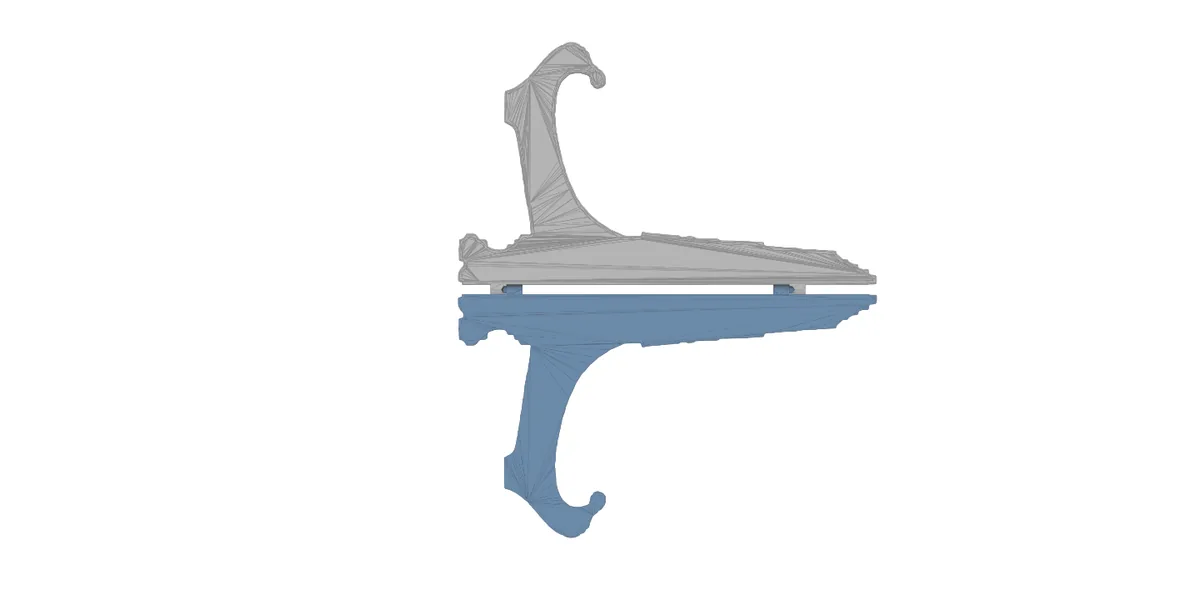
Two pipelines behind one command. For functional parts, a language model writes real CAD code that is executed in a sandbox and checked to the tenth of a millimetre. For organic models, AI mesh generation is followed by a solidification step that turns triangle soup into a guaranteed solid.
The brief
AI 3D generators produce pretty models that fail in the slicer: open edges, inverted normals, floating fragments. And they cannot make a bracket that is exactly 42 mm wide. We needed both, for our own product range and for client parts.
Under the bonnet
build123d on the OpenCascade kernel for exact geometry, trimesh, PyMeshFix and libigl for mesh work, FastAPI and three.js for the interface. Language model access auto-detects an API key or the Claude Code CLI. An end-to-end smoke test runs with no API keys at all.
What it shows
A meditation app that writes and voices a personalised session in about 25 seconds. React Native, FastAPI, subscriptions, ads, safety checks, and a public release on Google Play.
Give it one idea, a product photo or a video and it drafts, schedules and publishes to nine social networks, writes graded Etsy listings and renders your 3D models. Nothing goes out until you approve it.
Type a description or upload a photo, remove the background, dither or line-art it, and export a true-size SVG or PNG that drops straight into LightBurn or xTool at the right millimetres.
Next step